


RECOGNIZING THE WATER YOU'RE SWIMMING IN

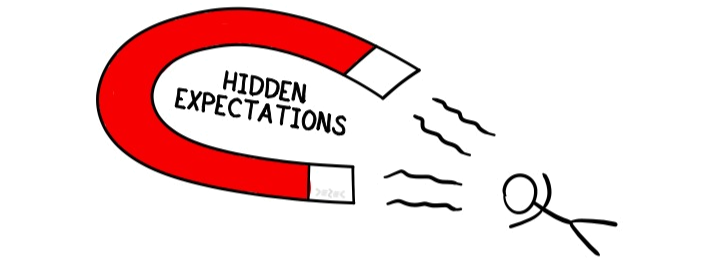
❝The really important kind of freedom involves attention, and awareness... The alternative is unconsciousness, the default setting, the "rat race."❞ -David Foster Wallace, This is Water
If you don't know the water you're swimming in, you can't choose your direction.
THE WATER WE'RE SWIMMING IN
In the adult cartoon Archer, the main character, Sterling Archer, tells his coworker Cyril to take his suit to his tailor and his shoes to his shoemaker.
Cyril asks, “You have a shoemaker?”
Sterling looks confused. “Do you not?”
It’s meant to be funny. It highlights Archer’s oblivious privilege. But beneath the joke is something deeper: we all assume our normal is universal.
Sterling spends time around people who have shoemakers. It never occurs to him that others don’t.
That’s the first-world version of a much broader truth.
We all live inside assumptions we rarely question.
David Foster Wallace once gave a famous commencement speech titled This Is Water. In it, he described how fish don’t notice the water they’re swimming in. It’s everywhere. It’s invisible. It’s simply “how things are.”
Money is similar.
Most of us move through life unaware of the expectations, cultural norms, and social pressures shaping our financial decisions. Becoming aware of that water doesn’t mean rejecting it. It means choosing more consciously within it.
OPERATING IN THE DEFAULT SETTING OF OUR FINANCIAL LIVES
We all swim in water we didn’t consciously choose.
It shapes:
- What success looks like
- What kind of career feels respectable
- What “normal” spending looks like
- What retirement is supposed to mean
- How busy we think we should be
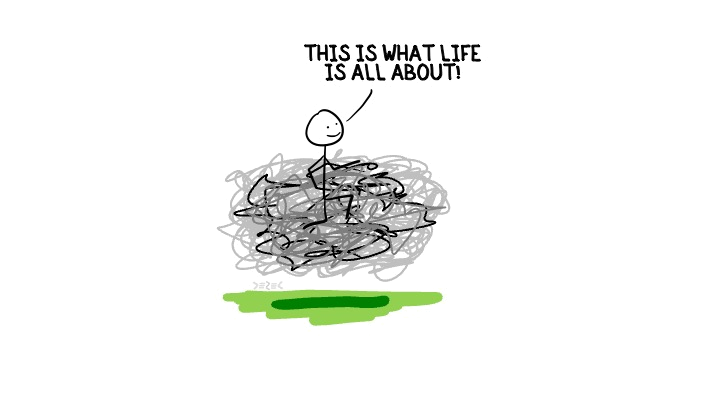
Most of us don’t wake up one day and decide to join the rat race. We drift into it. It feels natural and automatic.
That’s the default setting Wallace talked about. The water defines the rules before we realize there are rules.

THE EXPECTATIONS HIDDEN IN OUR FINANCIAL "WATER"
Human beings are wired for survival. For most of history, staying alive was the goal.
But once basic survival is taken care of, we move on to something more complicated: deciding how to live well.
And we’re not naturally skilled at that.
So we look around. We compare and copy. Psychologists sometimes refer to this as mimetic desire; we want what others want because they want it. The cultural shorthand is “keeping up with the Joneses.”
Advertising amplifies it. Social media magnifies it. The message becomes: People like us do things like this.
Our financial story starts forming almost automatically.
We pick up:
- The spending habits of our social circle
- The lifestyle expectations of our profession
- The financial philosophy of our family system
- The comparison game of our online feeds
In other words, we chase with the herd.

The tricky part is that we don’t even realize we’re in the herd. It feels normal.
|
 |
The Value Compass is designed to help you gain insight into your own values and how they guide your thoughts, feelings, and actions. It can be used to explore your personal goals and motivations, as well as to gain a better understanding of others' values and how they may differ from your own. |
 |
|
AWARENESS CREATES FREEDOM
The goal isn’t to escape the water entirely. The goal is to recognize it.
You don’t have to reject your lifestyle. You don’t have to feel guilty for enjoying success. You don’t have to rebel against everything familiar.
You just have to become aware.
Once you recognize the forces tugging at you, you can begin asking better questions.

For example:
- If you couldn’t tell anyone how you live, how would you live?
- What financial habits feel “automatic” rather than chosen?
- What would change if you weren’t being observed?
- What assumptions about money have you never questioned?
- If you moved cities, changed industries, or joined a different social circle, what would shift?
These questions aren’t meant to disrupt your life overnight, but they are meant to wake you up.
YOU'RE FREE TO CHOOSE YOUR DIRECTION
Without reflection, it’s easy to sleepwalk through life and do what we think we’re supposed to do. Sometimes it even feels good... like water to a fish.
But water isn’t the enemy.
The danger is swimming without realizing you’re swimming. Because if you don’t recognize the current, you’re not steering. You’re drifting. And drifting has a way of taking you somewhere you didn’t intentionally choose.
Awareness gives you something simple and powerful: the freedom to decide your direction.
You get one life; live intentionally.
Interested in more like this? Subscribe and get updates sent directly to you.
If you know someone else who would benefit from reading this, please share it with them. Spread the word, if you think there's a word to spread.
To share via text, social media, or email, simply copy and paste the following link:
REFERENCES AND INFLUENCES
Ariely, Dan & Jeff Kreisler: Dollars and Sense
Burkeman, Oliver: Four Thousand Weeks
Crosby, Daniel: The Soul of Wealth
Housel, Morgan: The Psychology of Money
Newcomb, Sarah: Loaded
Pausch, Randy: The Last Lecture
Wallace, David Foster: This is Water
Ware, Bronnie: The Top Five Regrets of the Dying


