


THE LAST TIME


❝No matter how many times you do something, there will come a time when you do it for the last time.❞ -Sam Harris
Every experience in your life has a last time. You almost never know when it is, and that should change how you design your life.
I'm playing three-on-three football. Wide open. The quarterback hits me in stride. Perfect throw. As I catch it, I get leveled. My best friend had let me appear open so he could get a running start. It hurts. I'm on the ground.
A few minutes later, I'm back up laughing despite my pain.
That was nearly 30 years ago. I haven't played football since. I didn't know that would be the last time.
I didn't get to savor it. I didn't get to decide. It just became the last time quietly, without announcing itself.
Prefer to watch?
LAST TIMES ARE ALREADY BEHIND YOU
Spend five minutes with this idea, and it gets uncomfortable fast. There are things you've already done for the last time: things you loved, things you took for granted, things you assumed you'd get back to.
The last time you ran without your knees complaining
The last time your kid asked to be carried
The last time you sat across from someone who is no longer here
You didn't know in the moment, most of us wouldn't have done anything differently if we had, but some of us would have. We would have paid closer attention, we may have stayed a little bit longer, or put the phone down.
That might feel uncomfortable. It's just information.
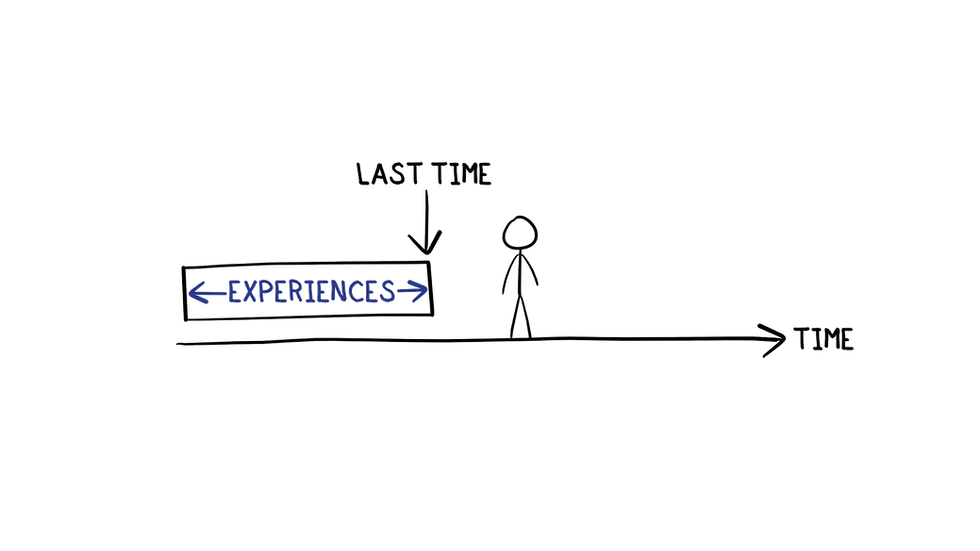
LAST TIMES ARE COMING
Here's where it gets a little harder.
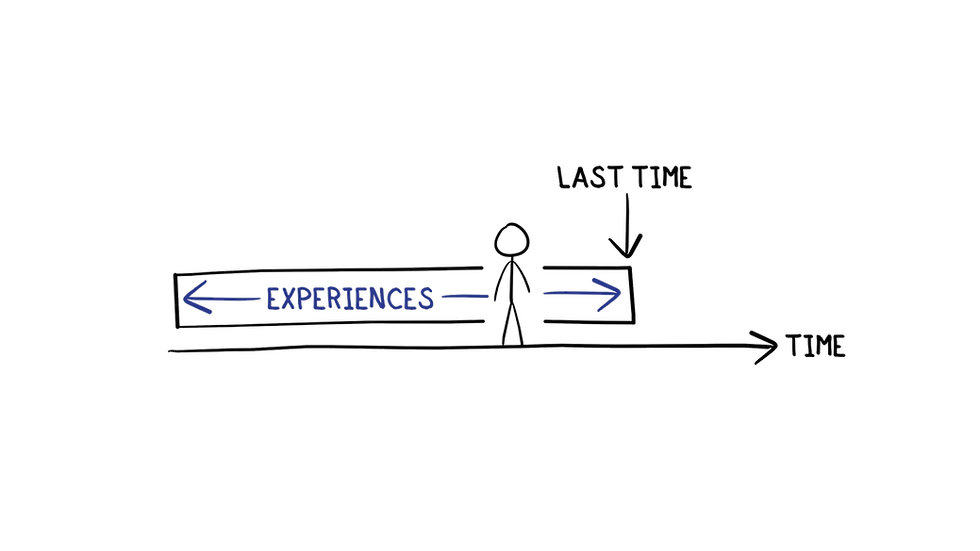
If you have young children, there will be a last time you pick them up. They'll get too big, and one day you'll set them down and never pick them up again. If you have parents, there will be a last time you have dinner with them. If you have a dog, a best friend, a Saturday morning ritual you love, all of it has a last time built in.
The hourglass is a useful image for life. The top and the bottom chambers connect at the present moment. The sand in the bottom chamber represents the life we have lived, the memories that we have had, and the top chamber represents the life that we have left. It's like "Days of Our Lives" used to say: "Like sands through the hourglass, so are the days of our lives."

The hourglass is a useful image, but it's missing something. We like to picture it as though we know how much sand is left, but we don't know. It's like there's a curtain over the top chamber. I call that the Uncertainty Curtain. You know the sand is there, you just don't know how much.
It's true of your life, and it's also true of your experiences.
You don't know how many times you have left to do the things that matter most to you.
The number is finite. The Uncertainty Curtain just keeps you from seeing it.

|
 |
A grateful person exhibits certain traits. Rather than feeling deprived in life, a grateful person experiences a sense of abundance. A grateful person acknowledges the contributions of others to his/her success and well-being, appreciates life's simple pleasures, and acknowledges the importance of experiencing and expressing gratitude. |
 |
|
USING LAST TIMES TO DESIGN YOUR LIFE
That knowledge can be a powerful motivator, but somewhere along the lines, many people stop, somewhere between unsettled and vaguely motivated, without knowing what to do next.
The point isn't to live in a state of constant existential awareness. That's exhausting and not particularly useful. The point is to let this change something specific: how you design your life and what you use your money and time for.
Most of us are on autopilot. We go through the motions of accumulating money and credential security without asking what any of it's actually for. We say "for retirement" without picturing what we want retirement to look like. We delay the trip, put off the dinner, avoid the experience, assuming there will be time later.
Sometimes there is.
But sometimes the sand runs out quickly.

Your money is a tool. It exists to fund something. The question this last time lens forces you to ask is: what is it funding? Is it funding the life you actually want, or is it funding a future version of your life that somebody else designed for you?
You get to decide which experiences you want. You have finite time, finite energy, and finite money. You can't do everything. That's not a limitation to manage around. That's the design constraint that forces the question: what actually matters?
Figure that out first, then get the money to follow.

YOU GET TO DECIDE
You won't always know when the last time is, but you can live in a way that means it won't catch you entirely off guard, because you are paying attention and you are showing up for the life you chose.
You get one life; live intentionally.
Interested in more like this? Subscribe and get updates sent directly to you.
If you know someone else who would benefit from reading this, please share it with them. Spread the word, if you think there's a word to spread.
To share via text, social media, or email, simply copy and paste the following link:
REFERENCES AND INFLUENCES
Ellis, Linda: "The Dash"
Hagen, Derek: Your Money, Your Values, and Your Life
Haidt, Jonathan: The Happiness Hypothesis
Hanh, Thich Nhat: You Are Here
Hanson, Rick: Hardwiring Happiness
Harris, Sam: Death and the Present Moment
Harris, Sam: Waking Up
Klontz, Ted: The Labyrinth: Birth and Death
Lindsay, James: Life in Light of Death
McKay, Matthew, John Forsyth, and Georg Eifert: Your Life on Purpose
Urban, Tim: Your Life in Weeks
Urban, Tim: Putting Time in Perspective
Waking Up Course: The Last Time (subscription required)


